
How Many Places Should You Visit on One Trip to Bali?
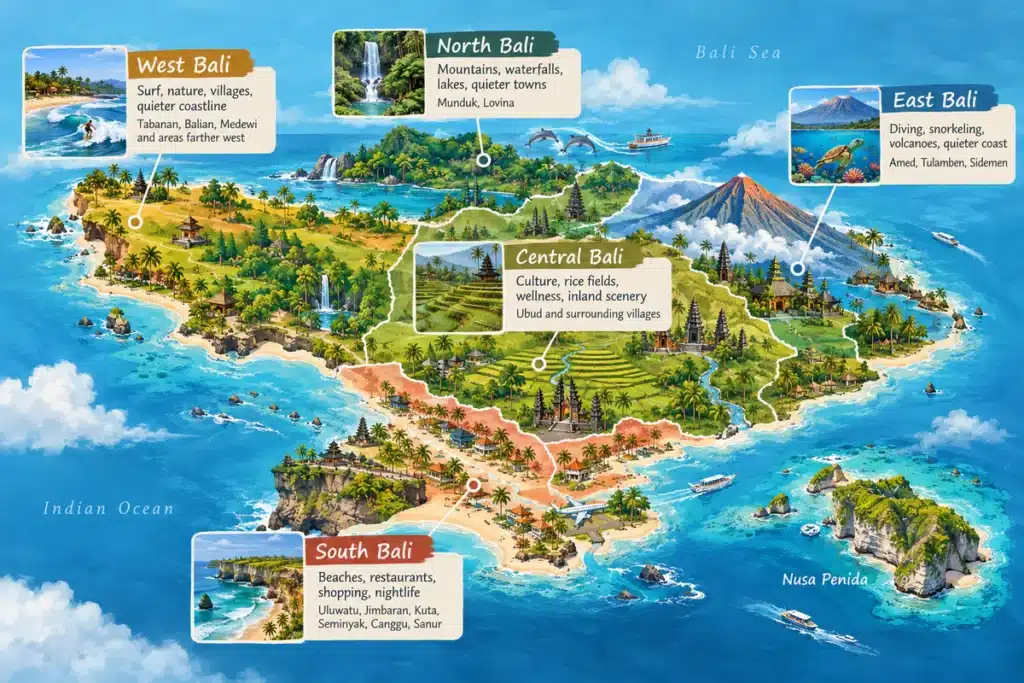
Bali looks small on a map. That can make a week feel like enough time to see most of the island. Then you start planning.
Uluwatu for the cliffs, Ubud for the rice fields, Amed for snorkeling, Munduk for waterfalls, Canggu for cafés, and maybe somewhere quiet place on the west coast. Suddenly, a relaxing Bali holiday has become a trip built around packing bags and getting from one place to another.
You can visit many places in Bali in one trip. The better question is how many you can actually enjoy. Instead of counting destinations, it helps to look at Bali by region and decide what kind of trip you want this time.
How Many Places Should You Visit in Bali?
There isn’t one number that works for everyone. A couple staying for two weeks will plan differently from a family visiting for five days or a surfer who wants to spend most mornings in the water.
As a simple starting point:
|
Time in Bali |
A Comfortable Pace |
|---|---|
|
3 to 5 days |
Focus on one region |
|
6 to 8 days |
Explore one or two regions |
|
9 to 12 days |
Two or three regions |
|
2 weeks |
Three regions, with room to slow down |
|
More than 2 weeks |
Explore more widely without rushing |
These aren’t rules. If you love moving around, you may want to see more. If the whole point of your holiday is to slow down, you may happily spend ten days between only two places.
The important thing is to remember that more stops don’t always mean more of Bali. Sometimes they just mean more time on the road.
Think About Bali as Regions, Not a Checklist
Bali changes more than you might expect as you move around the island.
The busy streets and beach clubs of the south feel very different from the villages and farmland of the west. Head north and you’ll find mountains and waterfalls. Travel east and volcanoes, diving areas, and smaller coastal towns become part of the landscape.
Breaking Bali into regions makes planning much easier. Choose the regions that match the holiday you actually want.
South Bali: Easy to Reach and Easy to Fill Your Days
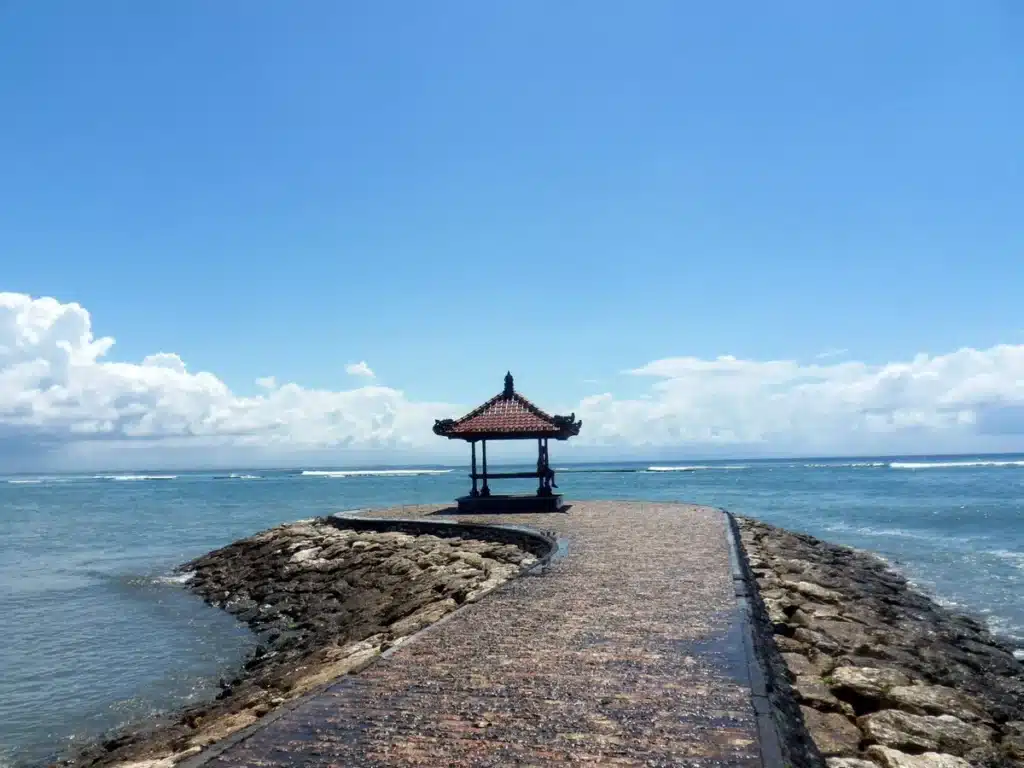
For many visitors, South Bali is where the trip begins.
The airport is here, and many of Bali’s best-known visitor areas are within this part of the island. But even South Bali isn’t one single experience.
Uluwatu has dramatic cliffs, surf breaks and beaches tucked below limestone hills. Jimbaran is known for its bay and seafood restaurants. Kuta and Seminyak put you close to shops, restaurants and nightlife, while Canggu mixes surf, cafés, restaurants and a busy social scene.
Sanur has a different feel again, with a calmer beachfront and easy access to boats heading toward nearby islands. You could easily spend an entire short holiday in South Bali without running out of things to do.
The trade-off is that some areas can be busy, and places that appear close together on a map don’t always feel close once traffic is involved.
Central Bali: Slow Down and Head Inland
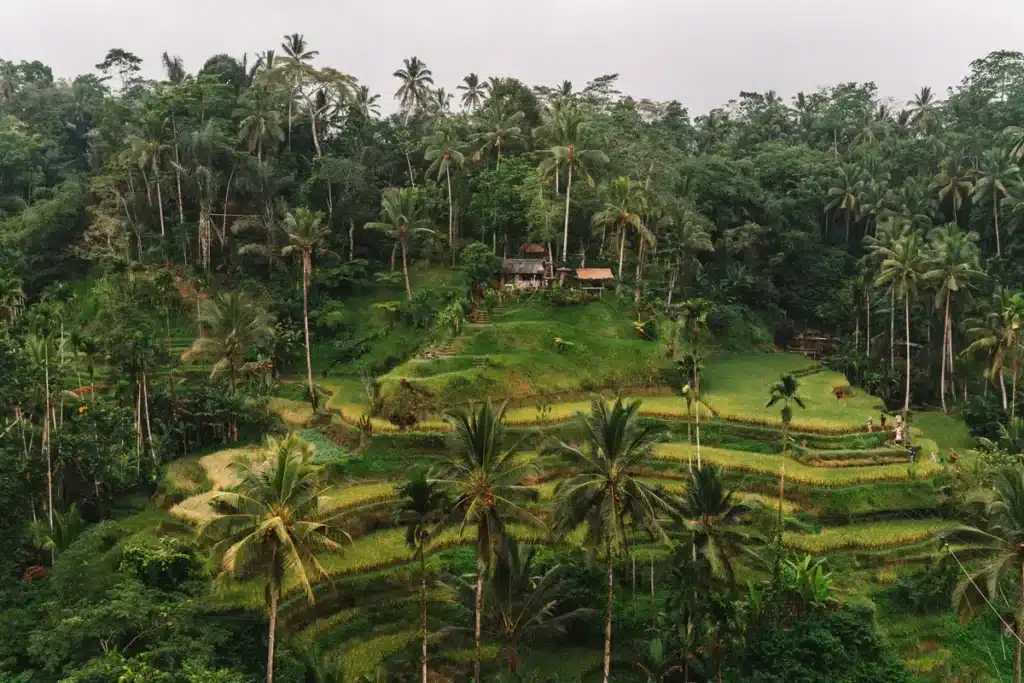
Ubud is usually the name people recognize first, but Central Bali is more than central Ubud. This part of the island brings you away from the coast and into rice fields, river valleys, temples, villages and greener inland landscapes. It’s a good contrast if the first part of your trip has been spent near the beach.
You might spend the morning walking through rice fields, visit a temple or gallery, have lunch overlooking a valley, and finish with yoga, a massage, or simply an early evening.
Ubud itself can be very busy, especially around the center. You don’t have to go far outside the main streets, however, before the surroundings begin to change.
For a first Bali trip, combining one coastal area with Central Bali can already give you two very different sides of the island.
East Bali: For the Ocean, Mountains and a Different Pace
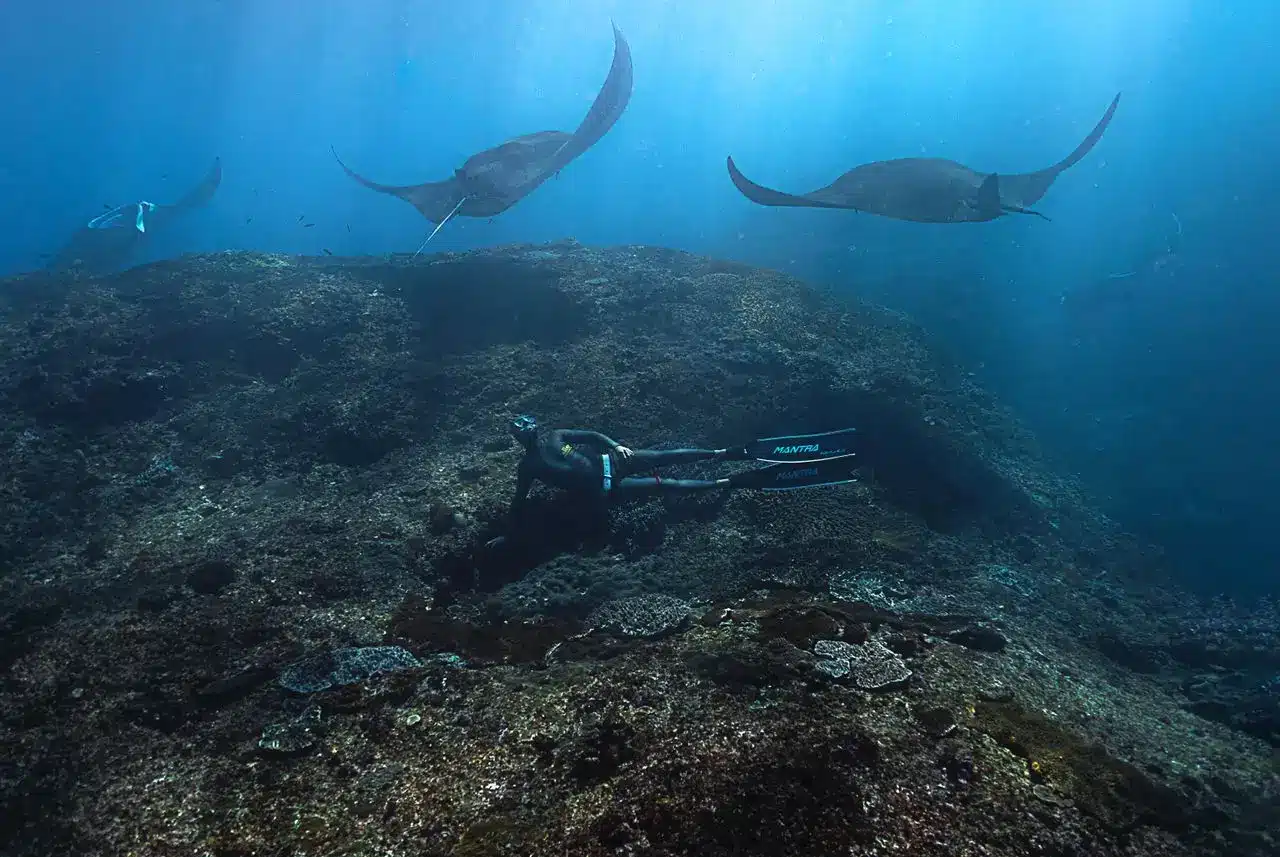
Continue east and Bali starts changing again.
Amed and Tulamben attract divers and snorkelers, with underwater sites close to the coast. Sidemen sits inland among rice fields, hills and villages, offering a completely different experience even though it belongs to the same broad side of the island.
Mount Agung is a major presence in this part of Bali, appearing behind villages and fields when the weather is clear. East Bali works particularly well when you have a reason for going there.
Choose East Bali for diving, quiet days by the sea, and rural landscapes. It feels far removed from the shopping, nightlife, and busy streets of the south. Give yourself enough time to stay rather than treating the east as another box to tick before driving somewhere else.
North Bali: Worth the Journey When You Have Time

North Bali is often squeezed into ambitious itineraries as a quick day trip.
That isn’t always the best way to experience it. The journey north takes you through Bali’s higher ground, where the air gets cooler and the landscape changes. Around Munduk you’ll find hills, forests, waterfalls and plantations. Continue toward the coast and you reach places such as Lovina.
The north makes more sense when you can give it some time. If you only have four days in Bali, spending hours travelling north and back may not be the best use of them. With ten days or two weeks, it becomes much easier to include without turning the journey into a race. This is where the length of your holiday starts to matter more than the number of attractions on your list.
West Bali: When You Want More Space

West Bali often receives less attention from first-time visitors.
Move west through Tabanan and development gradually becomes less intense. Rice fields, villages, plantations and long stretches of coastline become a bigger part of the journey. There are famous places here too, but much of the experience comes from what is between them.
You might stop at a small warung, pass ceremonies in a village, watch farmers working beside the road, surf in the morning, or spend an afternoon near a black-sand beach without feeling the need to go anywhere else.
Places such as Balian and Medewi have long attracted surfers, while inland Tabanan opens up another side of Bali through rice terraces, countryside and village life. West Bali isn’t necessarily where you go when you want to fit more into the day. It’s where having less on the schedule starts to make sense.
What About Nusa Penida, Nusa Lembongan and Nusa Ceningan?
They are often included in a Bali itinerary, but remember that visiting the Nusa islands involves another step: the boat.
A day trip to Nusa Penida is possible and very popular, but it creates a different experience from staying for a night or two. You’ll need to work around boat schedules, harbour transfers and travel on the island itself.
Nusa Lembongan and Nusa Ceningan can also be worth staying on rather than treating them as quick stops. If one of the islands is important to you, count it as a real part of your itinerary rather than squeezing it between two other Bali destinations.
Which Parts of Bali Should You Choose?
Start with what you actually want from the trip.
If this is your first Bali holiday
A coastal area combined with Central Bali gives you an easy introduction. You’ll experience the beach and inland Bali without trying to cover the entire island.
If surfing is the priority
Build the trip around the waves rather than famous attractions. South Bali, the west coast and areas farther west all offer very different surf experiences.
If you want diving and snorkeling
East Bali deserves more attention. Amed and Tulamben make more sense as part of the trip rather than a rushed journey from the south.
If you want nature
Central, North and West Bali give you plenty to work with. Choose one or two instead of collecting waterfalls across the whole island.
If you want restaurants, nightlife and shopping
You’ll find the greatest concentration in South Bali. There’s no reason to travel across the island every day if those are the things you’re enjoying most.
If you came to Bali because you need a break
Pick somewhere you actually enjoy staying. Give yourself mornings without alarms and afternoons without reservations. Explore when you feel like it. You don’t need to earn a relaxing holiday by completing an itinerary first.
FAQ
You Don’t Have to See All of Bali This Time
One of the nicest things about Bali is how much the island changes as you move through it.
A morning in Ubud doesn’t feel like a morning beside the ocean. The cliffs of the south don’t look like the green mountains of the north. East Bali has its own rhythm, and travelling west gradually takes you into another side of the island again.
Trying to fit all of them into one holiday can mean seeing a lot without really settling anywhere. Choose the parts of Bali that fit this trip. Stay long enough to enjoy them. The rest can wait until next time.